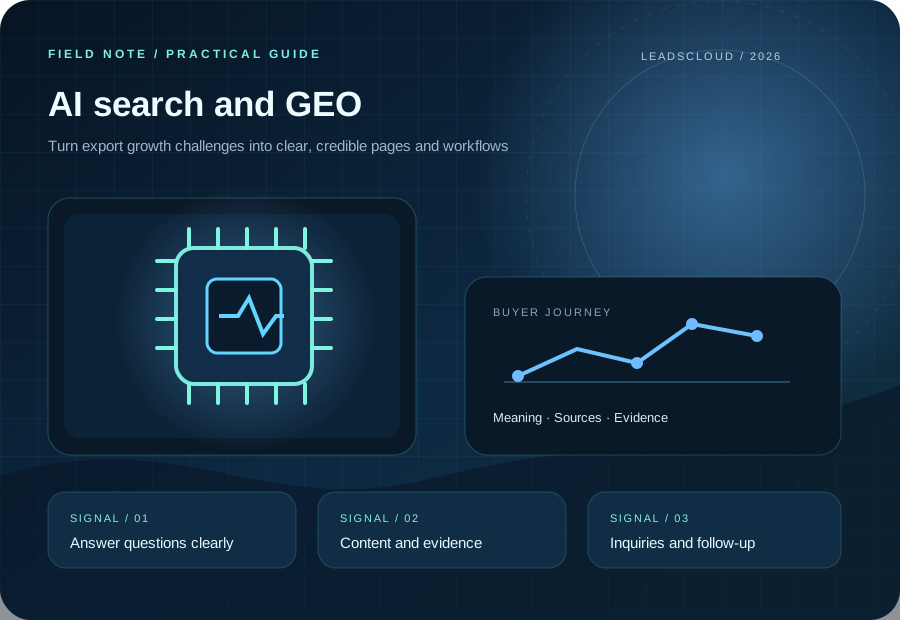
Five GEO activities
- Research how the industry and competitors appear in AI answers.
- Expand real question scenarios into a query list.
- Organize product, industry, value proposition, credential, technical and company information into a knowledge base.
- Create fact-rich, well-structured content that can be cited independently.
- Monitor platforms such as ChatGPT and Gemini, retaining screenshots and links.
AI answers change. GEO should not promise a fixed position; it should define the process, content output and monitoring criteria.
Base query research on real buyer questions
Queries are more than industry or product names. They include questions about applications, selection, specifications, quality, customization and delivery that buyers ask while comparing suppliers. Group them by buyer role and purchase stage, then prioritize topics the company can answer with verified information instead of adding unrelated terms to inflate a list.
Ground every answer in evidence
Organize company and brand information, product specifications, technical capabilities, applications, quality evidence and service boundaries separately, with source and update date. Distinguish facts, conditions and limitations. Verify accuracy and public authorization before mentioning certifications, customers, cases or results.
Connect production, publishing and monitoring
After publishing, revisit target AI platforms with a consistent prompt set. Save dated answers and citations, and record brand mentions, cited pages and competitor changes. Feed those observations back into query research, source material and content structure. Answers vary by platform; monitoring helps identify trends and gaps, not guarantee a fixed recommendation or sale.