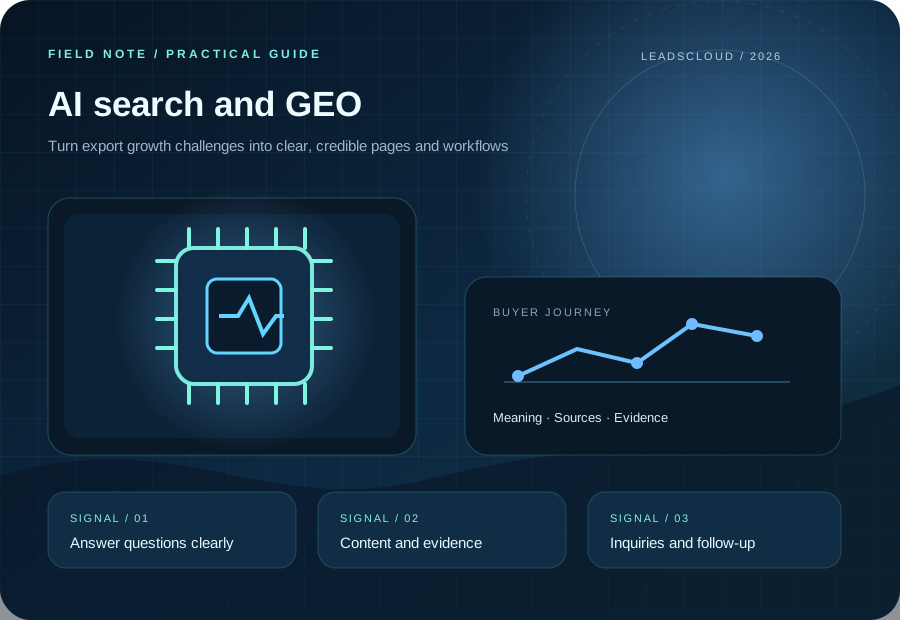
1. From search results to AI answers
The traditional path moves from search to click, browsing and inquiry. The emerging path looks more like asking, comparing, shortlisting and contacting. The official website remains a basis for evaluation, but it is also an entry point to company knowledge for AI systems and procurement teams.
2. Connect four touchpoints
- Website: provide clear, verifiable product, industry and company information.
- SEO/GEO: turn genuine expertise into content that Google and AI systems can retrieve.
- WhatsApp, email and social media: receive buyer questions and make it easier to respond.
- CRM: record, qualify and attribute interactions to inform the next round of content and campaigns.
3. Do not confuse replies with sales
A useful growth system distinguishes impressions, visits, qualified inquiries, replies, opportunities, sales and repeat purchases. This makes it clearer whether to improve pages, content, advertising or follow-up rules next.
Start with a consistent, verifiable company knowledge base
Organize the verified company name, brand spelling, product categories, specification ranges, applications, service process and contact details. Every capability should be traceable to product documentation, a public page or authorized evidence. Outdated claims, conflicting specifications and unapproved customer data should not enter public content.
Turn expertise into clear, answer-ready content
Start from questions buyers actually ask: what the product is, where it fits, how to choose specifications, how cooperation works and what must be confirmed. Give each page a clear topic, answer directly first, then add qualifications, evidence and related pages so both people and machines can understand the context.
Track a repeatable question set, not one-off screenshots
Prepare a consistent set of purchasing questions for each target market. Record the date, platform, exact prompt, whether the brand appears, cited sources and answer changes. Models, regions, languages and prompt wording all affect results, so one appearance or absence does not establish long-term performance or justify a promise of fixed rankings or placement.