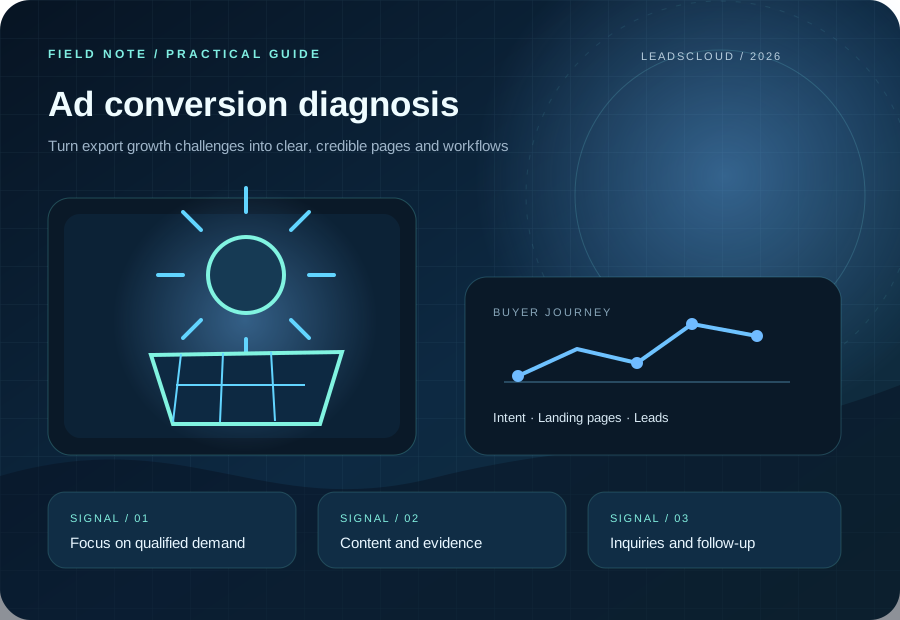
Locate the problem first
If there are no impressions, review keywords, budget and bidding. If impressions do not lead to clicks, review intent and creative. If clicks do not lead to inquiries, review the landing page, evidence and CTA. If inquiries do not become opportunities, review lead quality, response time and the sales process.
Prepare content before advertising
Prepare industry solutions, product pages, FAQs, case notes and inquiry forms first. Then use a limited budget to test keywords and customer profiles. Advertising does not replace the website; it amplifies a conversion path that is already prepared.
Diagnose the funnel one stage at a time
Break ad performance into a sequence of stages instead of judging it by one total inquiry number. Each stage points to a different diagnostic action:
- Low impressions: review the target market, search terms, audience settings and budget fit.
- Impressions but few clicks: check intent alignment and whether the headline and creative explain the product clearly.
- Clicks but few inquiries: check message consistency, proof and friction in the contact path.
- Inquiries but few opportunities: review lead fit, response time and sales follow-up records.
Make the landing page fulfill the ad promise
A landing page should quickly clarify which product, application or service the ad refers to, then provide the specifications, cooperation model, delivery information and contact route buyers need. Align its headline, visuals, copy and form with the same market and need; avoid sending every visitor to a broad homepage with an unclear next step.
Bring sales feedback into campaign reviews
Marketing and sales should agree on what qualifies as a valid lead, a sales-accepted lead, a confirmed need and an opportunity, while recording source and stage changes. Use real buyer feedback to refine terms, audiences, page content and follow-up. A click, form submission or automated reply is not the same as a sale.