No channel is universally better
Trade shows help build trust quickly; marketplaces can support volume for standardized products; an owned website builds long-term assets; and proactive outreach helps reach selected prospects. A mature mix often combines a primary channel, a growth channel and an asset-building channel.
Ask three questions first
- Is the buyer searching for a product or comparing suppliers?
- Is the decision-maker in procurement, engineering, management or distribution?
- What evidence does the buyer need to take the next step?
Choose channels to support buyer decisions, not simply to chase platforms that appear to have high traffic.
Choose channels around the buying journey
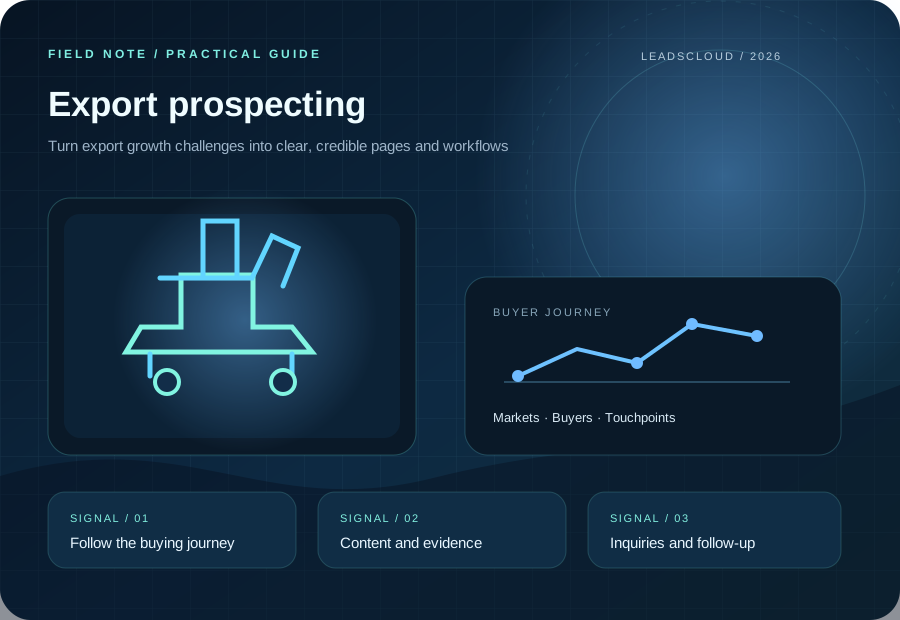
In B2B buying, channels serve different purposes: trade shows support face-to-face trust, marketplaces help buyers compare suppliers, an owned website preserves product and capability information, and proactive outreach reaches prospects that fit a defined profile. First identify whether buyers are discovering, comparing, validating or contacting suppliers, then choose the touchpoint that addresses the current gap.
Compare lead quality consistently
Do not judge channels only by visits, clicks or followers. For each valid inquiry, record its source, market, buyer type, product interest, fit, follow-up stage and next action. This shows whether a channel attracts intended buyers and whether the team is moving opportunities forward.
- Does the lead fit the target market and buyer profile?
- Did the buyer receive the information and evidence needed to evaluate the supplier?
- Is an owner assigned and is the next follow-up recorded?
Find the gap before prioritizing channels
If buyers cannot find complete product information, improve the website content and search foundation. If visits arrive but buyers cannot assess fit, clarify applications, specifications, delivery and FAQs. If inquiries receive no consistent follow-up, define ownership, response and pipeline stages first. Build the channel mix around real business gaps instead of launching everywhere at once.